


Pickleball Wrist Pain: What's Really Behind the Ache in Your Paddle Hand

Somewhere between your third and fourth match of the week, you notice it: a dull ache along the top of your wrist, or maybe a sharper twinge every time you snap off a dink. Pickleball wrist pain tends to creep in gradually, and most players assume it is simply a matter of holding the paddle too tightly or playing too often. The real story is usually more specific, and it rarely starts at the wrist at all.
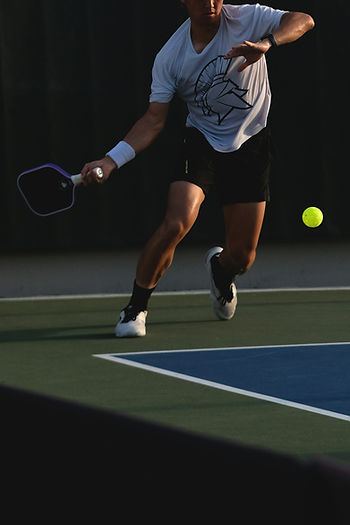
The wrist is a small, mobile joint asked to do a disproportionate amount of work in pickleball. Every dink, drive, and volley involves rapid, repetitive motion at the wrist, and if the forearm, elbow, and shoulder above it are not sharing the load properly, the wrist absorbs far more stress than it was built to handle on its own.
What's Actually Causing the Pain
Wrist pain in paddle sports typically comes from one of two directions: repetitive strain on the tendons that cross the wrist, or a lack of proper support from the muscles higher up the arm. The tendons running along the top and side of the wrist, particularly those controlling grip and wrist extension, take on load every time you snap the paddle through a shot. When the forearm muscles that should be sharing that work are weak or not activating efficiently, those tendons end up doing the job alone, shot after shot, match after match.
There is also a coordination piece that often gets overlooked. A proper paddle stroke should involve some shared effort from the shoulder and forearm rotating together. If the shoulder is not contributing its share, whether from limited mobility or a nervous system that has deprioritized that motion, the wrist and forearm compensate by taking on more of the workload than they are designed for. Over time, that shows up as pain right where you would expect: the wrist itself.
Why Common Fixes Fall Short
Most players dealing with wrist pain reach for a wrist brace, maybe some kinesiology tape before a match, and perhaps ice afterward. Some try dry needling or massage on the forearm to loosen things up.
These are understandable first steps, and they are not without some short-term benefit. A brace can limit painful motion during play, and tape or massage can reduce the sensation of tightness for a while. But none of these approaches change how the shoulder, forearm, and wrist are sharing load during an actual paddle stroke. If the shoulder still is not contributing its share of the motion, the wrist tendons continue absorbing more stress than they should, and the ache returns as soon as the brace comes off or the next match starts.
The Root Cause Approach
At Origin Health, we start by looking at the whole arm, not just the joint that hurts. Using neuromuscular facilitation testing from the One80 System, we assess how well the shoulder, forearm, and wrist are actually coordinating during the specific motions pickleball requires: quick wrist snaps, sustained grip, and repetitive forearm rotation.
This often reveals that the wrist is simply the site where an upstream problem is showing up. A shoulder that is not rotating properly, or forearm muscles that are not firing in the right sequence, can quietly shift more load onto the wrist tendons than they were ever meant to carry. Once we identify where the true limitation lives, we use manual therapy targeted at the muscle spindle to restore proper activation, then retest the movement immediately to see whether the change has taken effect.
From there, we build a MoStreBility plan specific to the demands of paddle sports: restoring any missing motion at the shoulder or forearm, layering in strength through that newly available range, and finishing with stability work that mirrors the quick, repetitive movements of an actual match. This is the piece that generic wrist exercises typically miss, because they train the wrist in isolation rather than as part of a coordinated chain.
What This Means for You
If your wrist is aching after pickleball, it is worth paying attention to a few details before assuming the wrist itself is simply overused. Does the discomfort show up more on your backhand or forehand side? Does your shoulder feel stiff or limited when you reach overhead or across your body? These clues can point toward whether the wrist is the true source or just where the compensation is landing.
A full-body movement assessment can determine whether your forearm and shoulder are sharing the load properly, or whether your wrist has been quietly picking up the slack match after match. Players who understand that difference stop relying on braces and tape as a long-term solution and start addressing the actual pattern driving the pain.
Frequently Asked Questions
Could my grip size or paddle weight be part of the problem? Equipment can play a role, but it is rarely the whole story. Even with well-fitted equipment, wrist pain typically points to a load-sharing issue somewhere in the arm. Addressing equipment fit alongside the underlying movement pattern gives the most complete picture.
Is it safe to keep playing while I work on the root cause? In most cases, yes, with some adjustment to volume and intensity while the underlying pattern is corrected. A proper evaluation will help determine what level of play is appropriate during treatment.
How does this differ from typical wrist strengthening exercises? Standard wrist strengthening tends to target the wrist and forearm in isolation. Our approach looks at the entire arm as a chain, identifies whether the shoulder or forearm is failing to share the load, and builds strength specifically where the true weak link is found.
Origin Health PT serves patients in Frisco, TX and the surrounding DFW area. If pickleball has left your wrist sore match after match, schedule an evaluation to find out what's really going on.


Comments