


Pickleball Elbow: Why the Newest Injury on the Court Isn't Really About Your Paddle

Pickleball has taken over Frisco, and along with the new courts and leagues has come a new wave of a familiar problem: pickleball elbow, an ache along the outside or inside of the elbow that flares every time you hit a backhand or serve. It sounds like a paddle problem, so people try a different grip size, a vibration dampener, or a new paddle altogether. Sometimes that helps a little. Often it does not, because the paddle is rarely the actual reason the elbow is being overloaded in the first place.
What Is Actually Causing Pickleball Elbow?
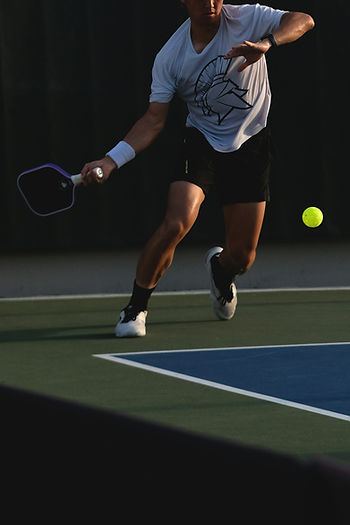
Pickleball elbow describes tendon irritation at the elbow, most often on the outside (similar to tennis elbow) but sometimes on the inside, caused by the repetitive, fast paced wrist and forearm motion the sport demands. Unlike tennis, pickleball is played with a smaller paddle, shorter swings, and a much higher volume of quick reactive shots, particularly at the kitchen line, where players are constantly punching, blocking, and redirecting the ball with the wrist and forearm rather than a full body swing.
That reactive, wrist-dominant style is exactly why pickleball elbow has become so common so quickly. When a shot does not have time for a full body wind-up, using the shoulder, trunk, and legs to generate power, the forearm and wrist end up doing work that a more complete kinetic chain should be sharing. The tendons on the elbow absorb that extra demand shot after shot, game after game, until they start to break down.
Why Equipment Changes and Rest Alone Fall Short
The first response to pickleball elbow is usually a paddle change, a compression brace, ice, and a break from play. These steps can genuinely help. A lighter paddle or different grip size reduces some of the vibration and load transmitted to the forearm, and rest gives the irritated tendon a chance to calm down.
What none of that addresses is the movement pattern generating the overload in the first place. If your shoulder and trunk are not contributing to your shots, whether because of limited rotation, poor footwork, or simply reacting too late to set up properly, the forearm and wrist will keep absorbing force they were never meant to handle alone. This is why pickleball elbow so often returns within a few weeks of getting back on the court, even with a new paddle in hand.
The Root Cause Approach to Pickleball Elbow
This is the exact pattern the One80 System is built to address. Rather than treating the elbow as an isolated problem, we look at the entire chain involved in a shot: trunk rotation, shoulder mechanics, footwork, and how well the body positions itself to generate power before the ball ever reaches the paddle. Pain is almost never caused only by the structure that hurts, and pickleball elbow is a clear example of a symptom with roots well beyond the joint itself.
If a player's trunk rotation is limited or their footwork consistently puts them in a late, reactive position, the forearm ends up generating force on its own for nearly every shot, which is a recipe for tendon overload regardless of paddle choice. Restoring trunk mobility and improving the body's ability to get into position earlier takes that burden off the forearm and allows the tendons on the elbow to actually recover instead of being reloaded every match.
What This Means for You
If pickleball elbow keeps coming back no matter what paddle you try or how much you rest, it is worth looking beyond the equipment. A properly fitted paddle and a period of rest are reasonable first steps, but if the pain returns as soon as you resume regular play, the actual mechanical cause was likely never addressed.
A movement assessment that looks at your trunk rotation, shoulder mechanics, and footwork, not just your grip or paddle weight, is a good sign that the real source of the problem is being investigated.
Frequently Asked Questions
Is pickleball elbow the same thing as tennis elbow? They are closely related. Both typically involve irritation of the tendons on the outside of the elbow from repetitive wrist and forearm motion, though pickleball's faster, more reactive style and shorter swings create a somewhat different loading pattern than a tennis swing.
Will a different paddle fix pickleball elbow? A lighter paddle or a change in grip size can reduce vibration and load on the forearm, which may provide some relief. It does not address an underlying movement pattern, such as limited trunk rotation or poor footwork, that is forcing the forearm to generate more force than it should.
How can I tell if my pickleball elbow needs more than rest? If the pain resolves with rest but returns within a few weeks of resuming regular play, that pattern suggests an unaddressed mechanical cause rather than a tendon that simply needs more time. A full movement assessment can identify what is actually driving the repeated overload.
Origin Health PT serves pickleball players and active patients throughout Frisco, TX and the greater DFW area. If pickleball elbow keeps coming back no matter what you have tried, a full-body movement assessment may reveal what your elbow has been compensating for. Reach out to schedule an evaluation.


Comments